
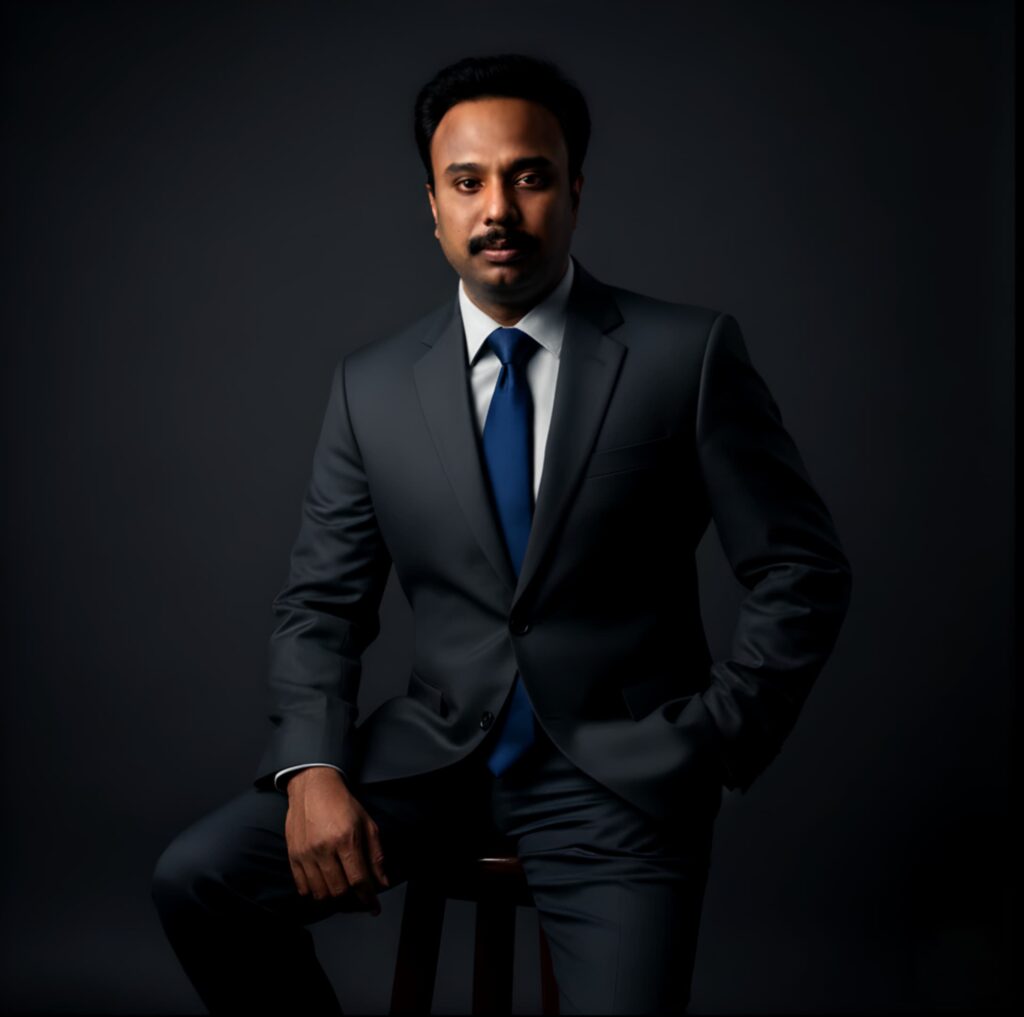
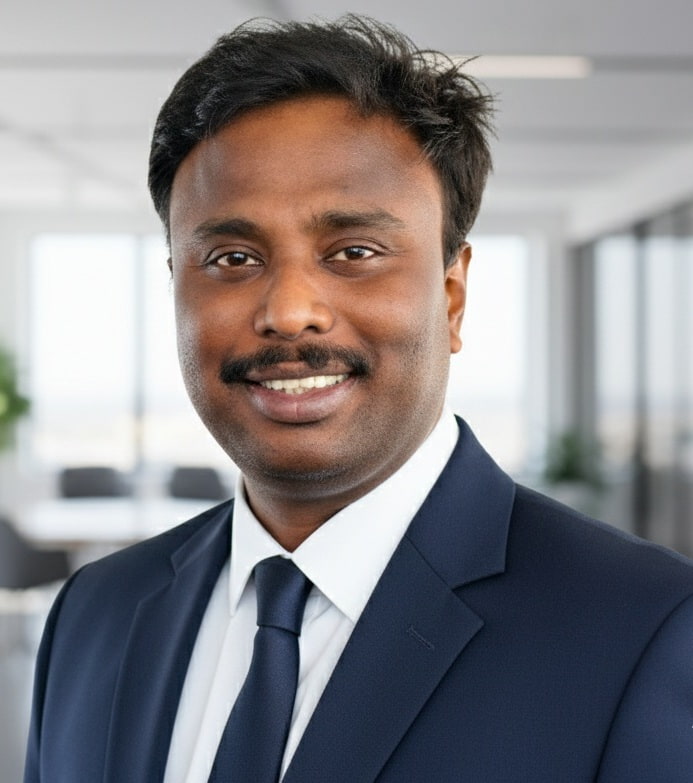
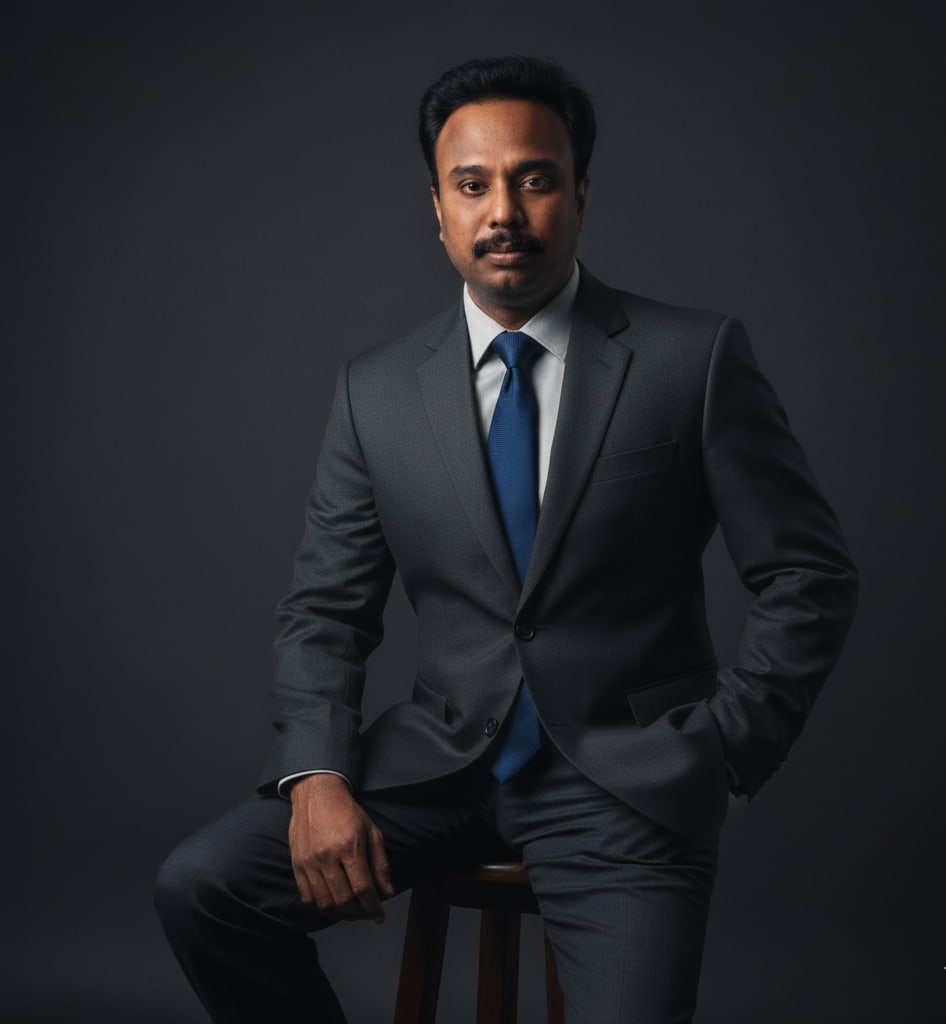
Sathish Krishna Anumula has emerged as a recognized enterprise architect and digital transformations leader, with over two decades of experience advising Fortune 500 organizations across smart manufacturing and enterprise systems.
Someone who has made the full journey from hands-on engineer to trusted advisor at the executive table. With over two decades of experience spanning manufacturing, supply chain, product engineering, and enterprise digital transformation, making it work for real businesses facing real challenges in smart manufacturing through the use of Technologies and around chasing innovation for its own sake, but around making it work for real businesses facing real challenges. Today, as a Senior Customer Success Architect at IBM Corporation, Sathish brings that depth of experience to CIOs, CTOs, and C-suite leaders across the United States, helping some of the country’s most complex organizations find their way through the demands of hybrid cloud, AI-driven automation, cybersecurity, and next-generation data platforms focusing on enabling enterprises to operationalize advanced technologies-including hybrid cloud, AI-driven automation, Cyber Security and digital engineering platforms-into measurable business outcomes across Manufacturing Frameworks of Industry 4.0 and 5.0 environments.
His story did not begin in a boardroom. It began with a curiosity about how systems work – how machines, electronics, and people interact to build and deliver the products that shape everyday life. Growing up, Sathish was drawn to the invisible architecture that keeps industries running, and that curiosity drove him toward formal education in Electrical and Electronics Engineering, followed by advanced studies in Applied Electronics and an MBA-equivalent qualification in IT, Strategy, and Operations from the Indian Institute of Management. It was a combination that would prove uniquely suited to a career spent bridging the often significant gap between technical possibility and business reality.
“Technology must serve people, business, and purpose – not the other way around.”
His earliest professional years were spent at the intersection of automotive manufacturing and enterprise software, where he worked on shop-floor automation, warehouse systems, and vehicle electronics. These experiences gave him an unusually grounded view of how technology investments translate – or fail to translate – into operational results. As he moved into Product Lifecycle Management (PLM), Manufacturing and supply chain software roles, he began to see a pattern: organizations had access to powerful tools and ambitious ideas, but frequently lacked the architectural clarity or governance structure to unlock their value. That gap became his calling.
The next major chapter came at Microsoft’s Devices Group, where Sathish served as a Technical Product and Program Manager and Portfolio Solutions Architect. There, he worked on enterprise platforms supporting the design, manufacture, and supply chain orchestration of hardware products including Xbox gaming consoles, Surface devices, and mobile phones. The scale was unlike anything he had experienced before – decisions made at the architecture level rippled through global factories, partner ecosystems, and millions of finished products. One achievement he counts among his proudest from that period was helping reduce per-console manufacturing costs by integrating design intelligence earlier into the production workflow. It was a lesson in how thoughtful architecture can translate directly into bottom-line results, a principle that has guided his thinking ever since. He also played a key role during the acquisition of a major mobile phone manufacturer, helping consolidate enterprise architectures and ensure continuity across global manufacturing operations.
From Microsoft, Sathish moved to Siemens Digital Industries, where he spent over six years as an Enterprise Solutions Architect focused on digital transformations and Industrial IoT initiatives. His work centered on architecting and delivering large-scale PLM and smart manufacturing platforms for Tier-1 automotive and hi-tech manufacturing companies, often through multi-year transformation programs worth hundreds of millions of dollars. He led the design of future-state enterprise architectures supporting organizations navigating mergers, acquisitions, and strategic shifts, drawing on TOGAF principles to establish reference architecture and governance models that could sustain change over time. This period deepened his conviction that architecture is not a technical exercise but a leadership discipline – one that makes trade-offs visible, connects vision to execution, and keeps today’s decisions from becoming tomorrow’s constraints.
When Sathish joined IBM, it was with a mandate that extended well beyond traditional architecture and design. Working as a Senior Customer Success Architect covering the U.S. Midwest market, he now partners with enterprises across manufacturing, hi-tech, medical devices, and utilities – organizations with complex, layered technology environments built over decades. His job is to help them modernize without losing operational stability, to scale innovation without sacrificing trust, and to ensure that investments in technology deliver real, measurable business value. He manages customer portfolios exceeding multimillion-dollar annual revenues, and for the past five consecutive years has earned IBM’s 100% Club recognition an internal distinction awarded to top-performing professionals based on measurable client impact and business outcomes. He has also been recognized as an IBM Champion for Industry, a designation awarded to a select group of technology leaders who actively contribute to advancing innovation and thought leadership across IBM’s global ecosystem and their customers.
What sets Sathish apart, according to those who have worked with him, is his ability to approach problems from the outside in. Rather than arriving with a predetermined solution, he begins by understanding a customer’s industry dynamics, competitive pressures, and operational realities before any technology conversation begins. This perspective allows him to serve as a genuine trusted advisor rather than a technology advocate – someone who can tell a CIO what they need to hear, not just what they want to hear. He works closely with IBM’s product teams and partner ecosystems, feeding real-world enterprise requirements back into product roadmaps, ensuring that the innovations IBM brings to market are grounded in what customers actually need.
“Responsible innovation is not a constraint on progress – it is the foundation for trust.”
His view of leadership reflects the same outside-in thinking. For Sathish, impactful leadership is not about authority or visibility – it is about creating sustained value in environments defined by complexity and change. The leaders he admires most are those who can translate vision into disciplined execution, who build trust through transparency and consistency, and who invest as seriously in developing other leaders as they do in delivering results. In his own teams and advisory relationships, he emphasizes clarity of purpose, psychological safety, and the kind of empowerment that allows talented people to exercise judgment without seeking permission at every turn. He is equally insistent that high performance and human sustainability are not competing priorities – that organizations which treat them as opposites eventually underperform on both.
One of the defining challenges of Sathish’s leadership career came during a large-scale enterprise integration following a major acquisition. Responsible for maintaining architectural direction and business continuity across interconnected global systems, he quickly realized that the skills most needed in that environment had little to do with technical expertise alone. The work required creating clarity for teams operating under significant uncertainty, aligning stakeholders with competing priorities, and making consequential decisions with incomplete information. It was a period that crystallized his leadership philosophy: effective leadership during high-stakes situations is less about heroic decision-making and more about distributed ownership, clear principles, and the kind of composure that allows teams to focus rather than react.
Outside his work at IBM, Sathish is deeply engaged in the broader technology and leadership ecosystem. He is a Senior Member of IEEE and serves as Vice-Chair within the IEEE Technology and Engineering Management Society (TEMS), where he contributes to advancing global standards and leadership practices in engineering and technology management. He has authored multiple technical textbooks covering Quantum Computing, IoT for Engineers, and AI and Ethics, and holds pending patents in quantum computing architectures and optimization methods. He participates in global conferences as a reviewer, program committee member, and keynote speaker, and he mentors early-career technologists and aspiring leaders with the same seriousness he brings to enterprise advisory work.
Colleagues and industry peers frequently recognize his ability to bridge business strategy and complex technical architecture, particularly in large-scale transformation programs involving distributed systems and global operations. These contributions reflect a consistent belief that expertise grows when it is shared, and that the next generation of technology leaders will shape enterprise transformation in ways that current leaders can only begin to anticipate. His perspectives on product lifecycle management (PLM), enterprise architecture, and digital manufacturing align with broader industry discussions on convergence between engineering systems and enterprise IT, similar to themes explored in leading industry publications such as Forbes Technology Council.
“Architecture is not a technical exercise – it is a leadership discipline.”
When asked about the trends he believes will most profoundly shape the industry in the years ahead, Sathish points not to any single technology but to convergence – the growing integration of AI, automation, digital twins, hybrid infrastructure, and physical operations into unified enterprise systems. He sees the shift from technology adoption to technology orchestration as the defining challenge for enterprise leaders over the next decade. Organizations that can harmonize these capabilities coherently will build lasting competitive advantage; those that continue to treat them as isolated initiatives will find themselves caught in cycles of fragmented transformation. Equally pressing in his view is the evolution of data from a byproduct of operations to a strategic asset – one that must be governed with the same rigor applied to financial or physical assets.
He is also unequivocal about the role of ethics in technology leadership. As AI and automation become embedded in consequential decisions across manufacturing, healthcare, finance, and infrastructure, leaders cannot treat ethical governance as a compliance checkbox. It must be built into architecture, into deployment practices, and into organizational culture from the start. Responsible innovation, in his framing, is not a constraint on progress – it is the foundation for trust, and trust is the foundation for sustainable adoption. Organizations that get this right will earn the confidence of customers and partners; those that do not will face credibility and compliance challenges that dwarf whatever short-term gains they made. His work reflects a broader focus on building sustainable enterprise architectures and developing leadership capabilities that extend beyond individual transformation programs.
This approach has been applied across large-scale enterprise environments involving global manufacturing and engineering systems. This is not measured in implementations completed or revenues influenced, though his track record on both counts is substantial. What he returns to, again and again, is the question of durability: whether the organizations he has worked with are more resilient and better equipped to evolve long after his direct involvement ends, whether the professionals he has mentored carry forward a leadership approach grounded in clarity, empathy, and integrity, and whether the frameworks and insights he has contributed to the broader industry help others navigate complexity more confidently. Technology, as he sees it, must serve people, business, and purpose – not the other way around. After more than two decades at the intersection of innovation and execution, that conviction has only deepened.
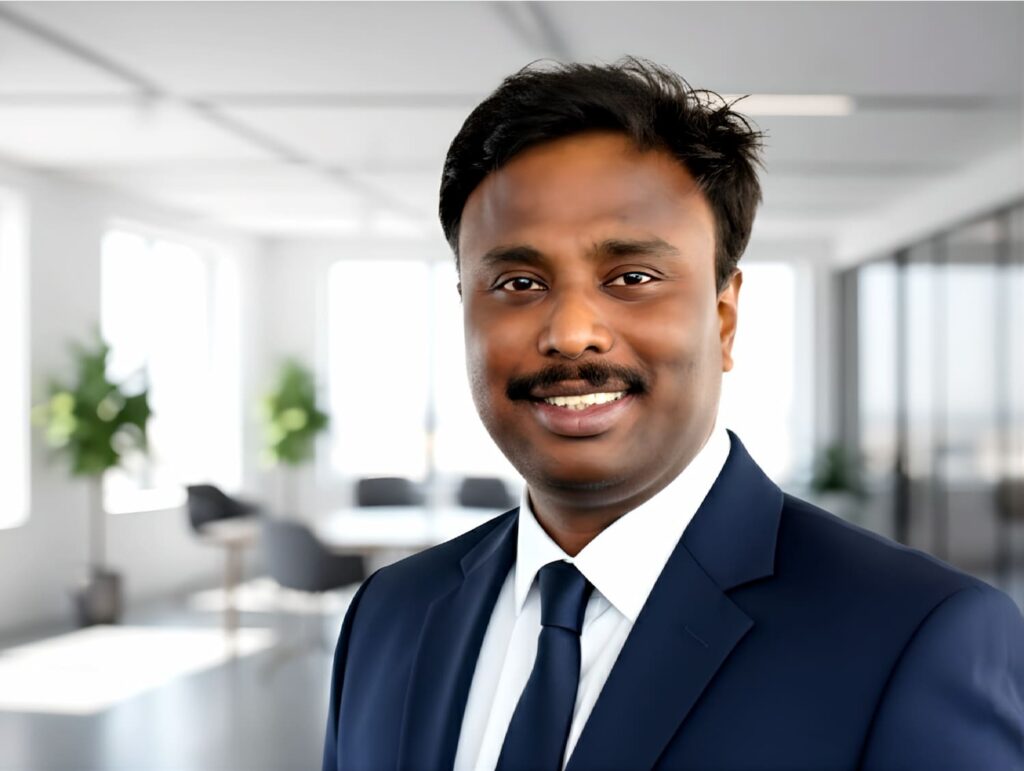
In a field often defined by what is new, Sathish Krishna Anumula is distinguished by what endures – a commitment to building things that last, developing leaders who thrive, and ensuring that the complex work of digital transformation creates value not just for enterprises, but for the people and communities they serve.
“Expertise grows when it is shared.”